Aromatherapy Diffusers — Which One Is Right for You?
Essential oil diffusers · Classic techniques · Ratios & safety
Essential oil diffusers are simple tools.
Unfortunately, choosing the wrong one or using it incorrectly means you get less from your oils.
Which is why we will find the right one for you.
Let’s look at what you need to know, including the exact ratios, the best blends for each type, and how to stay safe.
Want to make it easy on you? Go here for the curated shopping list.
Note: The article contains affiliate links that may earn a commission; otherwise, the price is unaffected. All references are carefully selected to provide the best and most wholesome results.
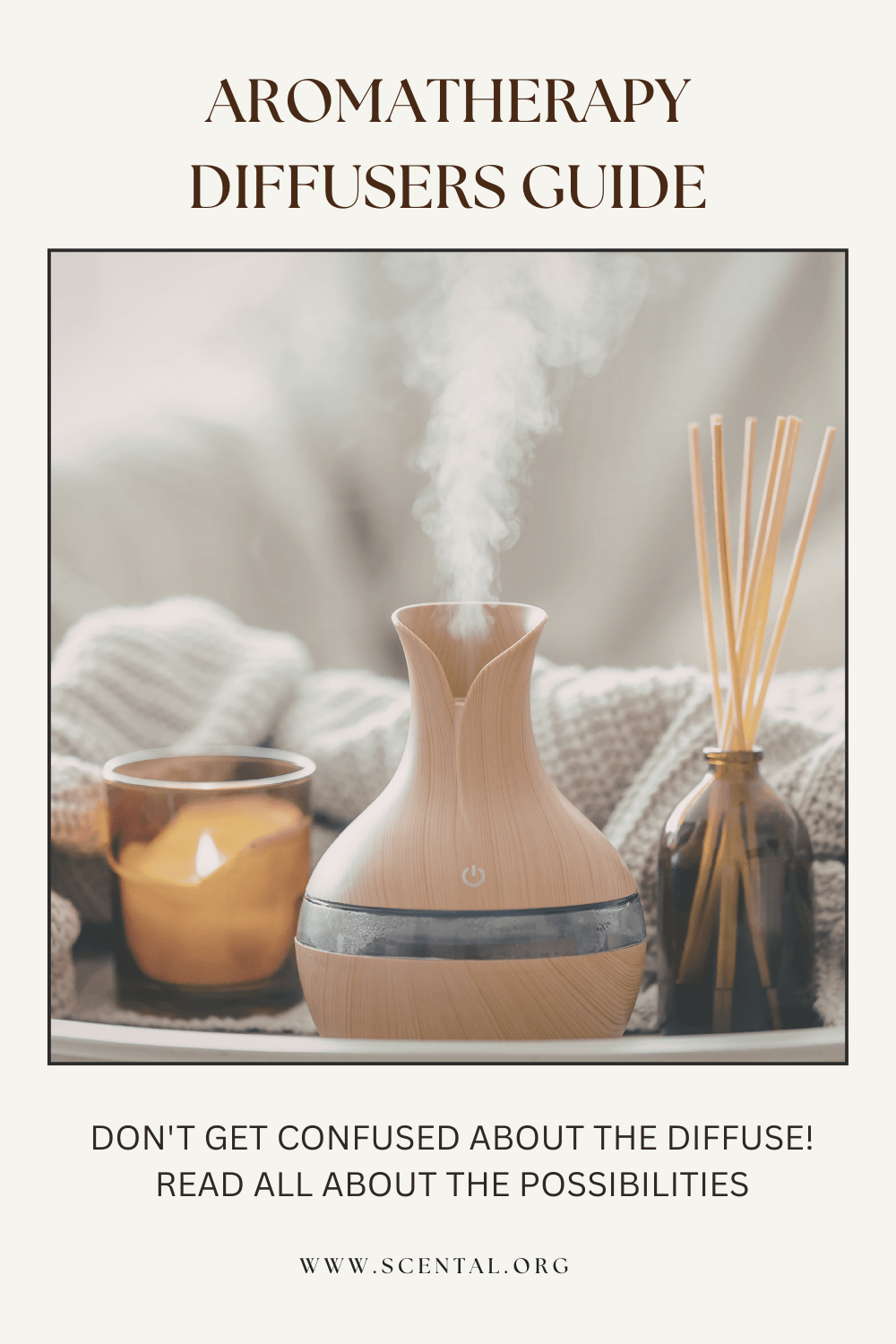
Not all aromatherapy diffusers work the same way.
Some diffusers use water, others use heat, and then some disperse pure, undiluted oil with no water.
Each method changes how strong the scent is, how long it lasts, and how much of the oil’s therapeutic value survives into the air you breathe.
Heat, for example, breaks down delicate plant compounds.
Cold diffusion, like ultrasonic or nebulizing, preserves them.
This is how it differs between having a nice smile and an EO that actually helps and creates a better situation.
If you are using essential oils for health reasons, sleep, memory, hormonal support, stress relief, cold diffusion delivers greater benefits.
Below you will find a complete guide to every major diffuser type: how it works, how to use it, safe ratios, and a ready-to-use essential oil blend created specifically for each one.
How Aromatherapy Diffusers Work
Every diffuser does one thing: it breaks essential oil into tiny particles, which are then released into the air.
When you inhale the essential oils, the particles interact with the olfactory system and the part of your brain connected to memory, emotion, and the nervous system.
This is why scent can shift your mood within seconds. It is biology.
The method of dispersal matters. Ultrasonic diffusers use vibration. Nebulizers use pressurized air.
Reed diffusers use capillary action, the same process that draws water up through a plant stem.
Candle burners use heat. Each approach has strengths, limitations, and a natural best use case.
The key variables to consider are: potency (how much oil reaches the air), preservation (whether the oil’s chemistry remains intact), coverage (how large a space it fills), and practicality (ease of use, cost, and maintenance).
Once you understand these, choosing the right diffuser becomes straightforward.
The 6 Main Types of Aromatherapy Diffusers
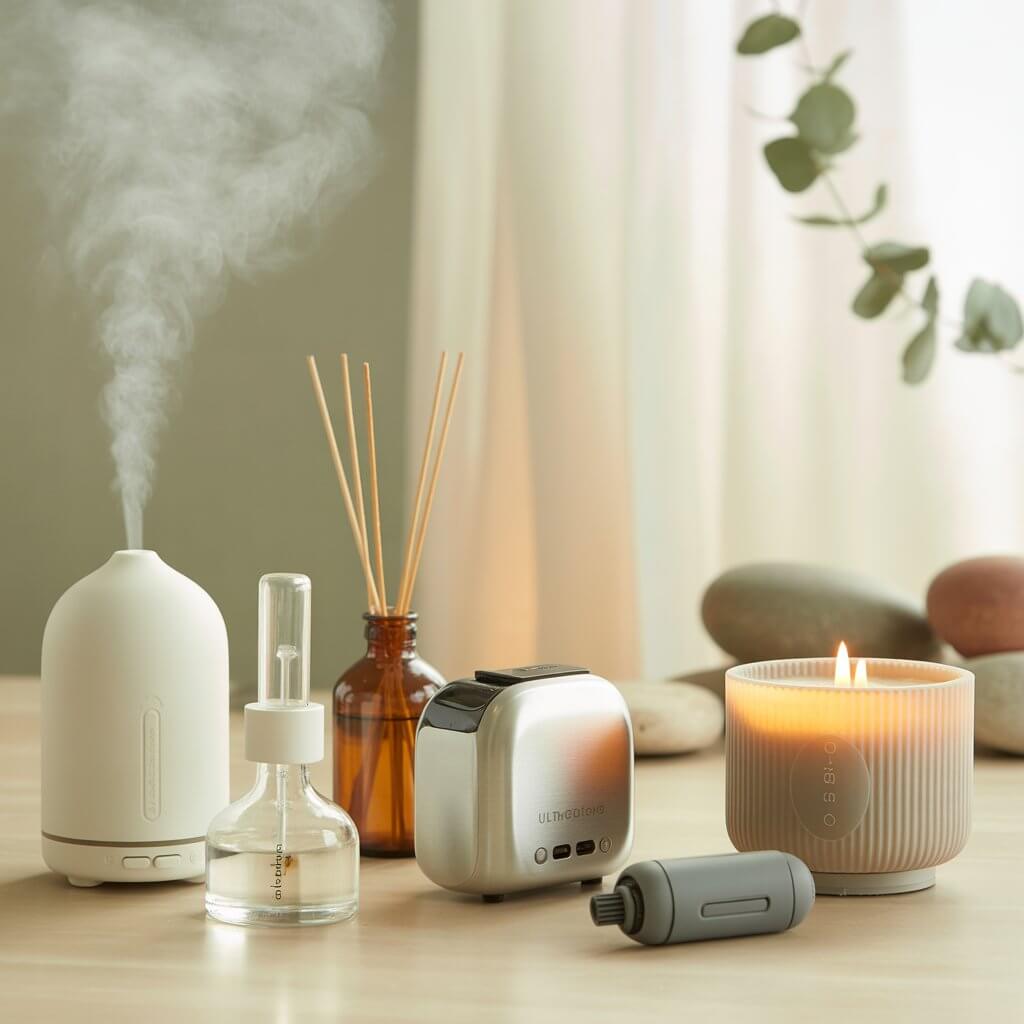
Ultrasonic Diffuser
Most popular
Uses water and high-frequency electronic vibrations to create a fine, cool mist.
The most widely used aromatherapy diffuser and the most forgiving for beginners.
It doubles as a humidifier, making it especially useful in dry climates or in heated rooms in winter.
The mist is cool, so the oils are not heated, and their chemical structure remains largely intact.
This provides both therapeutic benefits and a pleasant, lingering scent.
Most models run quietly and have an auto shut-off when the water runs out.
Add 5–10 drops of essential oil per 100ml of water.
Run it for 30–60 minutes, then give yourself a 30-minute break.
Continuous diffusion dulls the olfactory response and can cause headaches. More is not better.
Coverage: Medium room
Oil method: Diluted in water
Session time: 30–60 min
Recommended blend
Morning Clarity
- 3 drops Rosemary
- 2 drops Lemon
- 2 drops Peppermint
- 1 drop Eucalyptus
Fresh, bright, and mentally activating.
Diffuse for 30 minutes before your workday begins.
Rosemary supports memory, lemon uplifts mood, and peppermint cuts through fog.
Nebulizing Diffuser
Most potent
No water. No heat.
A nebulizing diffuser uses pressurized air to atomize pure essential oil into an ultra-fine mist of microscopic particles.
This is the most therapeutically powerful method available because the oil enters the air undiluted and in its complete chemical form.
The scent is noticeably stronger than other diffuser types. A nebulizer can fill a large room quickly.
This also means it consumes oil faster, and it is more important to use it in short sessions.
15–20 minutes is usually enough.
Some people find the intensity overwhelming at first, so start with just 10 minutes and build up.
Nebulizers are the preferred choice of aromatherapists for targeted therapeutic use, including respiratory support, deep relaxation, immune system support, and intensive sleep protocols.
They are also the most expensive type and require more cleaning.
Oil residue builds up in the glass reservoir and must be periodically cleared with a small amount of rubbing alcohol.
Coverage: Large room
Oil method: Undiluted, pure
Session time: 15–20 min
Recommended blend
Deep Restoration:
- 4 drops Frankincense
- 3 drops Lavender
- 2 drops Cedarwood
- 1 drop Vetiver
Rich and deeply calming.
The frankincense slows the breath, lavender quiets the nervous system, cedarwood and vetiver anchor the blend with an earthy, grounding base. Use this in the evening or before meditation.
Reed Diffuser
Gentle
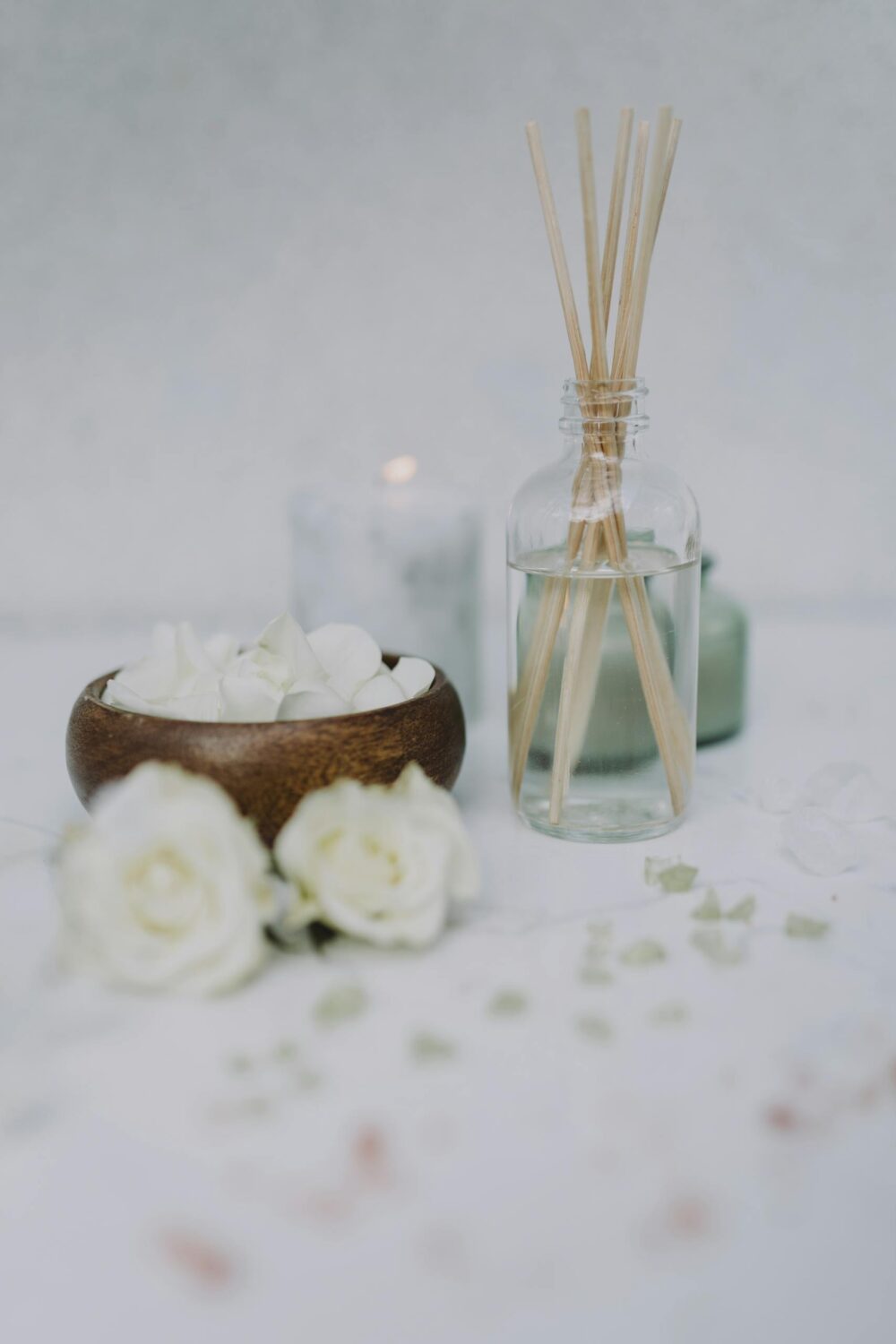
Reed diffusers work through capillary action, the same mechanism that draws water up through plant stems.
Wooden or rattan reeds sit in a vessel containing diluted essential oil in a carrier liquid.
The oil travels up through the reeds and evaporates gradually into the air, releasing a soft, continuous scent.
There is no electricity, no heat, and no maintenance beyond flipping the reeds every few days to refresh the scent release.
A well-made reed diffuser can last 4–12 weeks, making it one of the most cost-effective options over time.
It is ideal for spaces where you want a constant ambient scent, such as an entrance hall, a bathroom, or a bedroom.
The therapeutic effect is gentler than that of active diffusers.
Think of it as ongoing background support rather than a focused session.
Reed diffusers work beautifully for emotional well-being, mood, and creating a consistent sensory environment that your nervous system begins to associate with calm.
Classic ratio for reed diffusers: 25–30% essential oil to 70–75% carrier (fractionated coconut oil, sweet almond oil, or dipropylene glycol).
A heavier carrier, such as fractionated coconut oil, provides a slower, longer-lasting release.
A lighter carrier like DPG moves faster and throws more scent.
Coverage: Small room
Oil method in carrier oil
Duration: 4–12 weeks
Recommended blend
Quiet Evening:
- 10 drops Sandalwood
- 8 drops Bergamot
- 6 drops Lavender
- 4 drops Ylang Ylang
Warm, soft, and deeply comforting.
This blend works in any room but is particularly beautiful in a bedroom or reading nook.
The sandalwood base gives it longevity; bergamot keeps it from feeling heavy.
Candle Diffuser / Oil Burner
Atmospheric
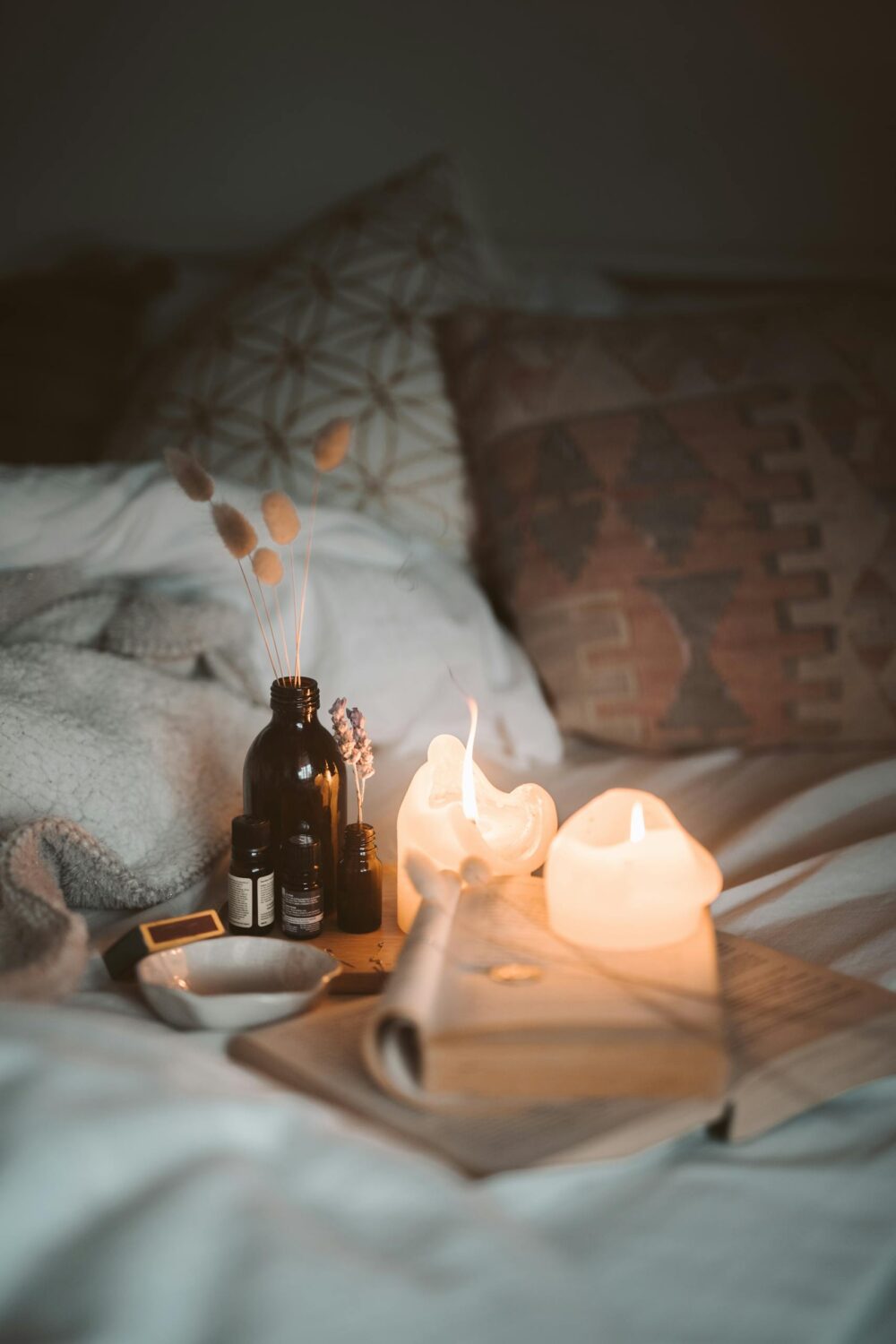
A candle diffuser, also called an oil burner, uses the heat of a tea light candle to warm a small ceramic or metal dish holding a mixture of water and essential oil.
As the water heats, it carries the oil into the air as fragrant vapour.
Simple, beautiful, and no electricity required.
The limitation is heat. When essential oils are warmed above a certain temperature, their molecular structure begins to change.
Delicate compounds, particularly those responsible for therapeutic effects, break down.
This means a candle diffuser is excellent for creating atmosphere and enjoying fragrance, but less effective for targeted therapeutic use compared to cold-mist methods.
That said, it is a genuinely lovely experience.
The soft flickering light, the rising scent, the ritual of lighting a candle and choosing your oils, these things matter.
Used as a wind-down ritual at the end of the day, a candle diffuser creates a sensory cue for relaxation that, over time, can become deeply effective through conditioned response.
Your nervous system learns what the scent means.
Always keep the dish topped up with water to prevent the oil from burning directly on the ceramic.
Add 4–6 drops of oil to water in the dish. Never leave unattended.
Coverage: Small room
Oil method: Diluted in water
Best use: Ambiance & mood
Recommended blend
Winter Hearth:
- 3 drops Sweet Orange
- 2 drops Cinnamon Bark
- 2 drops Clove
- 1 drop Ginger
Warm, spiced, and deeply inviting. Use this for slow evenings.
It fills a room with a rich, cozy scent that feels like a lit fireplace. Perfect for living spaces and slow dinners.
Personal Inhaler
On-the-go
A personal aromatherapy inhaler is a small, lipstick-sized tube containing a cotton wick soaked in essential oil.
You hold it to your nostrils and inhale slowly and deeply. No mist. No diffusion.
Just direct, concentrated inhalation. It is the fastest way to get an essential oil to your brain.
Personal inhalers are ideal for focus, memory recall, stress response, and any situation where you need a specific effect quickly and discreetly.
They fit in a pocket, a handbag, a desk drawer.
You can carry multiple inhalers, one for focus, one for calm, and one for energy, and switch between them as the day requires.
To fill one, add 15–20 drops of your chosen blend directly to the cotton wick.
Cap it immediately to preserve the oils. Replace the wick every 3–6 months, or when the scent fades significantly.
The tube and cap are reusable. Inhalers are inexpensive, long-lasting, and one of the most underrated tools in an aromatherapy practice.
Use 3–5 slow inhalations per nostril, 2–3 times a day. For memory blends, use before tasks requiring concentration.
For calm blends, use as soon as you feel tension rising; do not wait until you are overwhelmed.
Coverage: Personal
Oil method: Directly on the wick
Duration: 3–6 months
Recommended blend
Focus On Demand:
- 7 drops Peppermint
- 6 drops Rosemary
- 4 drops Basil
- 3 drops Lemon
Fast-acting and effective. Add all drops directly to the inhaler wick.
Use before meetings, during study sessions, or whenever brain fog is getting in the way.
Results are usually felt within 60 seconds.
Car Diffuser
Travel
A car diffuser clips to an air vent or plugs into a USB port and uses a replaceable absorbent pad or a small reservoir to hold essential oil.
The car’s ventilation system carries the scent through the cabin.
Simple, discreet, and surprisingly effective for a space that small.
Long drives can be mentally draining.
The right blend in your car diffuser can make a meaningful difference to alertness, patience, and mood.
For commutes, this is particularly worth considering, as your morning scent exposure can genuinely set the tone for your working day.
Choose oils that sharpen focus and lift mood rather than relax and sedate. You are, after all, driving.
Use 3–5 drops on the pad. Reapply every 3–5 days or when the scent fades.
Keep oils away from car upholstery.
Undiluted essential oils can stain or damage some surfaces.
Always store oils in the car away from direct sunlight, as heat accelerates deterioration.
Coverage: Car cabin
Oil method: On an absorbent pad
Reapply every 3–5 days
Recommended blend
Clear Road:
- 3 drops Lemon
- 2 drops Peppermint
- 1 drop Eucalyptus
- 1 drop Rosemary
Fresh, alert, and clean.
Keeps you mentally present without being overpowering in a small enclosed space.
Lemon and peppermint do the heavy lifting.
Eucalyptus opens the airways on congested mornings.
Classic Ratios at a Glance
Using the right ratio matters. Too little oil and you will not feel the effect. Too much and you risk headaches, irritation, or simply wasting oil. Here are the standard ratios for each method:
| Fill the dish ¾ | Water | Essential oil | Notes |
|---|---|---|---|
| Ultrasonic | 100ml | 5–10 drops | Scale proportionally for larger tanks |
| Nebulizing | None | Pure oil only | Use sparingly — 15–20 min sessions only |
| Reed diffuser | None | 25–30% EO / 70–75% carrier | Heavier carrier = slower, longer release |
| Candle burner | Fill dish ¾ | 4–6 drops | Always keep water in the dish |
| Personal inhaler | None | 15–20 drops on wick | Replace wick every 3–6 months |
| Car diffuser | None | 3–5 drops on pad | Reapply every 3–5 days |
Safety — What You Need to Know
Essential oils are natural, but they are also potent.
A few simple rules keep you safe and help your practice stay effective in the long term.
Session limits
Never run a diffuser for more than 60 minutes without a break.
Continuous exposure dulls the olfactory response and can cause headaches or nausea.
Pets
Many oils are toxic to cats and dogs — including tea tree, eucalyptus, peppermint, and citrus. Always diffuse in a room where your pet can leave freely.
Pregnancy
Several oils are contraindicated during pregnancy. If you are pregnant or trying to conceive, consult a qualified aromatherapist or healthcare provider before use.
Children
Dilute more heavily for children and avoid strong oils like peppermint and eucalyptus for children under 10.
Keep all oils stored safely out of reach.
Oil quality
Use only 100% pure, therapeutic-grade essential oils with clear botanical sourcing.
Synthetic fragrance oils do not provide therapeutic benefits and can irritate the airways.
Ventilation
Always diffuse in a ventilated room. Open a window slightly or ensure good airflow.
A sealed, unventilated space concentrates the particles too heavily.
5 Tips to Get the Most From Your Aromatherapy Diffuser
- Rotate your blends. Olfactory fatigue is real. Your nose adapts to the same scent within days and stops registering it as strongly. Switch between at least 2–3 different blends each week to keep the therapeutic effect sharp and your senses engaged.
- Consistency over intensity. Diffusing daily for 30 minutes delivers better long-term results than occasional two-hour sessions.
- The cumulative effect of regular, moderate exposure builds meaningful neurological associations over time.
- Match oil to moment. Use stimulating oils: rosemary, peppermint, lemon, basil during the day for focus and energy.
Use calming oils — lavender, cedarwood, frankincense, vetiver — in the evening for wind-down and sleep. Using the wrong oil at the wrong time will undermine both. - Clean your diffuser regularly. Oil residue builds up over time and affects diffusion quality.
- Rinse your ultrasonic diffuser with clean water after each use, and clean it thoroughly with a drop of white vinegar once a week.
- A dirty diffuser can also emit stale, muddled scent from residual oil mixing.
- Give it time. Essential oils work gently and cumulatively.
- For neurological benefits, memory, sleep quality, and mood regulation, commit to consistent use for at least 6–8 weeks before evaluating results. The shift is gradual, but it is real.
Which Aromatherapy Diffuser Should You Start With?
If you are new to essential oils, start with an ultrasonic diffuser.
And check out the shopping list here.
They are affordable, easy to use, quiet, and forgiving.
Add a personal inhaler to your bag, and you have a complete, practical system for home and travel, all for under 30 euros.
Once you know which oils and blends your body responds to best, consider adding a nebulizer for targeted therapeutic sessions, sleep support, immune health, or deep relaxation.
It is the most powerful tool in the aromatherapy diffuser toolkit, but it works best once you already know what you are working with.
Reed diffusers and candle burners are beautiful additions to a home environment.
They create atmosphere and reinforce scent associations in your living spaces.
But they are the complement, not the foundation, of a serious aromatherapy practice.
The diffuser is just the delivery system.
The oil is the medicine.
Use both with knowledge, intention, and consistency, and you will feel the difference.
Want to Go Deeper?
Explore ready-to-use aromatherapy diffuser blends for better sleep, sharper memory, and grounding with exact drop counts for every recipe.
Read: Memory, Sleep & Grounding — 7 Essential Oil Blends for Menopause Relief →
Related reading
- Fragrance Layering: How to Layer Scent That Lasts All Day
- The Empowering Potential of Scent: The Emotional Intelligence of Aromatherapy
- Emotional Detox Protocol: A 15-Minute Essential Oil Reset
- Discover the Emotional Comfort of Lavender Essential Oil


One Comment
Comments are closed.