What Is Slow Living — And How to Actually Practice the Art of Slow Living
Most of us know the feeling: you finish a full day and can’t name a single moment when you were fully present.
Your body was there, but your mind was already three steps ahead.
Slow living is the practice of stepping back from that.
It’s not about doing less for the sake of it. It’s about being more deliberate with where your attention and energy go.
The art of slow living is learning to notice your life as it’s happening — not just managing it.
This guide is practical.
It covers what slow living looks like day to day, which habits actually help, and how simple rituals, including essential oil blends, can support your nervous system along the way.
Note: The article contains affiliate links that may earn a commission; otherwise, the price is unaffected. All references are carefully selected to provide the best and most wholesome results.
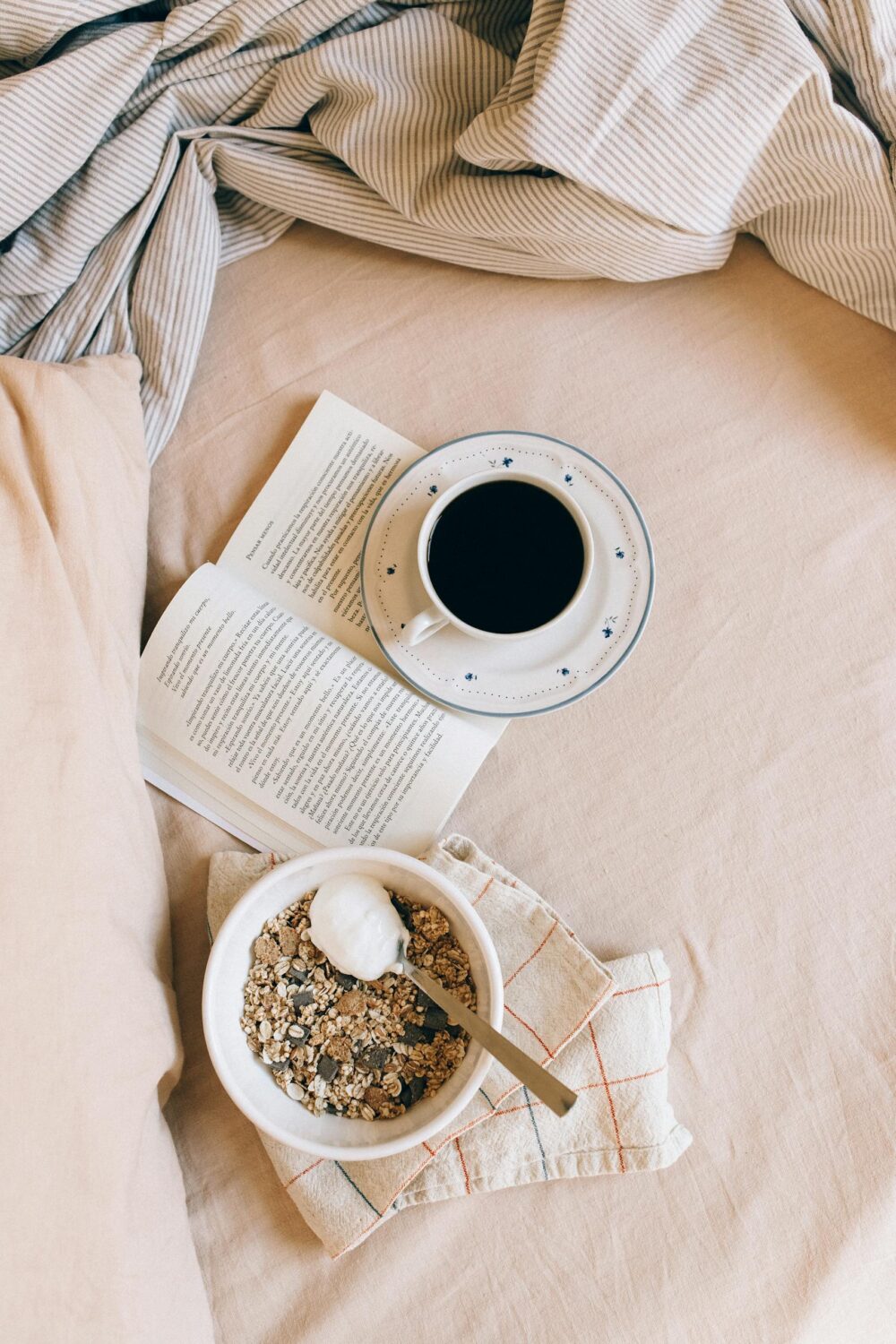
What Is Slow Living, Really?
Slow living is a lifestyle choice. It means trading constant busyness for a pace that feels sustainable and human.
You stop optimizing every hour and start protecting time for what matters — rest, connection, nature, creativity.
It doesn’t require a move to the countryside or a dramatic life overhaul.
You can begin by describing how you handle your mornings, your evenings, and the small gaps in between.
The slow living lifestyle is also deeply personal.
For some, it looks like weekly trips to a farmers’ market.
For others, it’s putting the phone in another room at night and reading before bed.
The details shift — the intention stays the same.
Digital Boundaries: The Foundation of Slow Living
Your nervous system can’t distinguish between a physical threat and a full inbox.
Constant notifications keep you in a low-grade state of alert.
One of the most effective ways to adopt a slow living lifestyle is to create real distance from your devices.
Here’s what works:
Remove social media from your phone.
Don’t mute it. Remove it. Use a desktop browser if you need it at all.
The friction alone reduces compulsive checking.
Set tech-free hours.
Pick a window: maybe 7 pm to 8 am, when your phone is off or in another room.
Let it sleep somewhere other than your bedside table.
Use a paper planner.
A physical book forces you to see your week as a whole.
When you schedule visually, you start to notice how little white space you’ve left yourself.
Protect that space.
Don’t fill it.
Keep a physical book nearby.
When you have a few minutes between tasks, doom-scrolling becomes the default.
A book on the counter changes that default.
It doesn’t need to be literary, just something you’re genuinely curious about.
These aren’t radical changes.
But they significantly shift the texture of your day.
Slowdown Anchors: Physical Habits That Reset Your Nervous System
The body responds to rhythm and ritual.
Slowdown anchors are specific, repeatable actions that signal to your nervous system that it’s safe to ease up.
Build a morning brew ritual.
Grinding coffee beans by hand or steeping loose-leaf tea does something that a pod machine doesn’t — it creates a pause.
You can’t rush it.
Your hands are occupied.
For five minutes, there’s nothing else to do.
That’s the point.
Take unstructured walks.
Leave your phone at home.
No podcast, no destination, no step count.
Walk your neighborhood for fifteen minutes and just look at things.
Coastal paths, walking trails, a quiet street — the location matters less than the absence of input.
Start a tactile hobby.
Knitting, painting, jigsaws, pottery, pick something that keeps your hands busy without a screen involved.
The key is doing it without any pressure to produce or monetize.
It’s just for you.
Journal at the end of the day.
This is one of the most underrated slow living practices.
Write down what happened, how you felt, and what’s sitting with you.
It moves the day out of your head and onto paper, which makes rest easier.
Essential Oil Rituals That Support Ease and Grace
The art of slow living includes caring for your nervous system directly.
Scent is one of the fastest pathways to the brain; through the olfactory nerve, it reaches the limbic system (your emotional center) almost instantly.
This is why certain smells feel calming before you’ve even registered why.
Here are a few practical essential oil practices to weave into a slow life:
Morning Clarity Blend (Diffuser or Inhaler)
- 3 drops of bergamot
- 2 drops rosemary
- 1 drop frankincense
Bergamot supports mood and reduces cortisol.
Rosemary sharpens focus without overstimulation.
Frankincense slows the breath and activates the parasympathetic nervous system — your “rest and digest” mode.
Use this while you make your morning coffee or tea.
Safety note:
Bergamot is photosensitive. If applying topically, use bergapten-free (FCF) bergamot, and avoid sun exposure on the area for at least 12 hours.
Midday Reset Blend (Roll-On, 2% Dilution)
- 4 drops lavender
- 3 drops cedarwood
- 2 drops vetiver
- In 10ml of fractionated coconut oil
Apply to pulse points, wrists, behind the ears, and base of the throat.
This blend targets the vagus nerve pathway.
Vetiver in particular is grounding and is used in some trauma-informed aromatherapy practices for its ability to anchor scattered attention.
Dilution ratio:
For a 2% dilution in a 10ml roller, use 9 drops of essential oil total.
Never apply undiluted essential oils directly to skin.
Evening Wind-Down Blend (Bath or Diffuser)
- 4 drops roman chamomile
- 3 drops sandalwood
- 2 drops clary sage
Roman chamomile works gently on the nervous system.
Sandalwood is calming and grounding.
Clary sage supports hormonal balance and reduces anxiety — particularly useful in the evening.
For a bath:
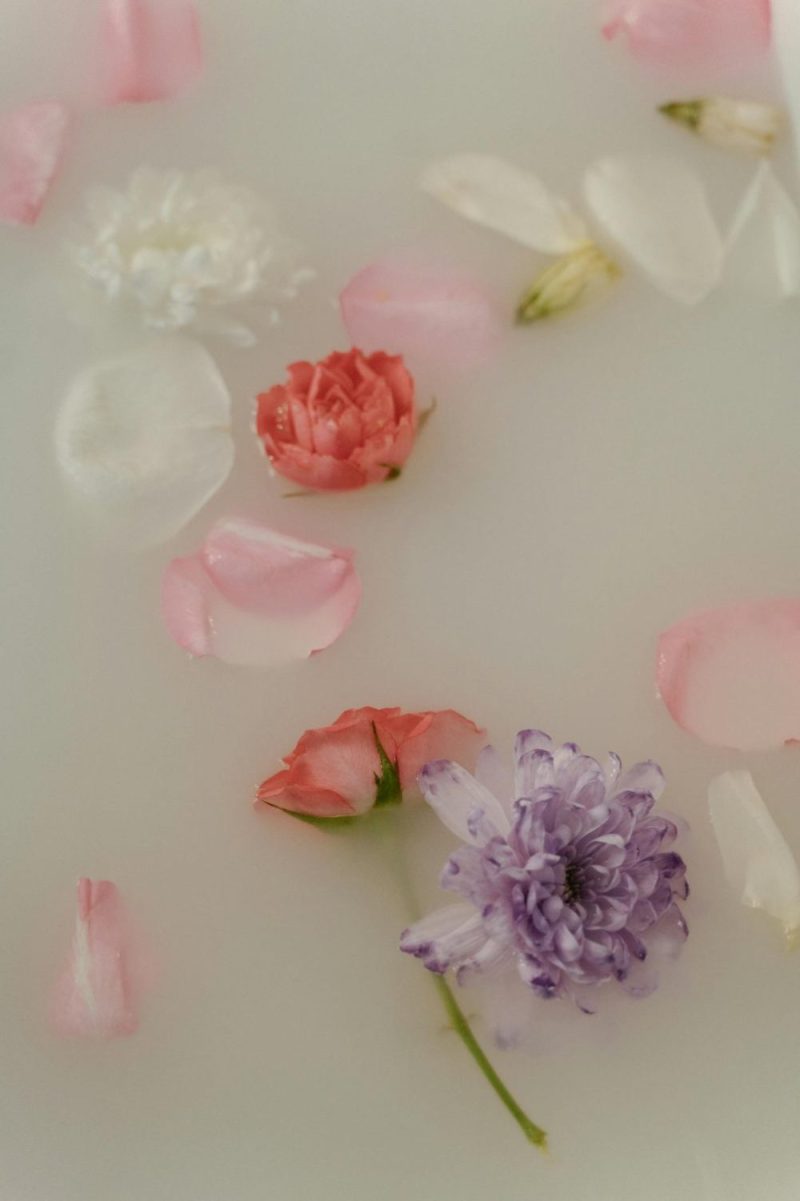
Mix your essential oils into a carrier (a tablespoon of whole milk or unscented bath gel works well) before adding to water.
Oils don’t disperse in water on their own, and undiluted exposure to concentrated oils in a bath can irritate the skin.
Safety note:
Clary sage is not recommended during pregnancy.
Consult a practitioner if you’re pregnant or nursing before using any new essential oil blend.
Creating a Calming Environment
Your environment shapes your nervous system more than most people realize.
Visual clutter creates mental noise. Here’s how the slow living lifestyle applies to your physical space:
Favor natural materials.
Linen, wood, ceramics, cotton — these textures signal calm.
They’re not perfectly smooth or synthetic.
They have weight and variation.
A room with these materials feels different to be in.
Declutter regularly.
This doesn’t mean becoming a minimalist overnight.
It means setting aside twenty minutes each week to edit your space.
One shelf, one drawer, one corner.
Over time, the cumulative effect is significant; your brain processes less, and your body relaxes more easily.
Use scent as part of your decor.
A reed diffuser with a grounding blend, a beeswax candle, or a small bowl of dried herbs on a windowsill are sensory anchors.
They make a room feel intentional.
Slow Friendships and Local Life
One of the quieter losses of a rushed life is depth in relationships.
Slow living includes how you spend time with people.
Schedule unstructured time with friends.
Not drinks with an end time. Not coffee “for an hour.”
A slow afternoon, a long walk, a meal where nobody has anywhere to be.
These interactions build something that efficient socializing can’t.
Shop locally when you can.
Farmers’ markets, local cafes, neighborhood bakeries, these aren’t just convenient.
They connect you to where you live.
You learn the names of vendors. You see the same faces.
That kind of rootedness is part of what makes slow living feel grounding rather than just slow.
Explore your immediate area.
The coastal paths, the neighborhood streets, the parks you walk past but never stop in.
Slow living often starts right outside your front door.
A Note on Neurological Pathways
The habits here aren’t random.
They work because of how the nervous system responds to repetition and sensory input.
When you do the same calming ritual at the same time each day, grinding coffee, applying a roll-on, sitting with your journal, your brain begins to associate that action with ease.
Over time, the ritual itself triggers a parasympathetic response before you’ve even registered the scent or sensation.
This is called a conditioned relaxation response.
It takes time.
Most people notice a shift after two to four weeks of consistent practice.
But the neurological pathway builds — and becomes easier to return to, even on hard days.
Where to Start
You don’t need to implement all of this at once.
Pick one thing:
- Put your phone in another room tonight.
- Make tomorrow’s coffee slowly, without your phone in hand.
- Take a fifteen-minute walk without earphones.
- Mix a simple lavender and cedarwood blend for your diffuser.
- And download the free Fresh Start, beginning a non-toxic lifestyle PDF.
The art of slow living isn’t a destination. It’s a direction.
Each small choice to pause, to notice, to be present moves you that way.
For a curated list of tools, books, and products that support a slow living lifestyle, see the Slow Living Lifestyle collection on Benable.
We focus on the practical use of scent and essential oils for well-being.
Always patch-test new blends and consult a qualified aromatherapist or healthcare provider if you have specific health concerns.
- https://scental.org/aromatherapy-diffusers-which-one-is-right-for-you/
- https://scental.org/essential-oils-to-relax-non-toxic-home-guide-for-optimal-relaxation/
- https://scental.org/what-is-natural-beauty/
- A fresh start – free download.
One Comment
Comments are closed.