Lavender Essential Oil for Relaxation: Benefits, Blends & Emotional Wellbeing
Lavender has a quietly reassuring quality.
Its soft, floral scent can make an ordinary moment feel a little more peaceful, whether it drifts through a bedroom in the evening or accompanies a few minutes of stillness after a demanding day.
For centuries, people have valued lavender in perfumery, bathing rituals, and traditional botanical preparations.
Today, lavender essential oil remains one of the most familiar aromatherapy ingredients, especially for people seeking relaxation, emotional comfort, and a more restful evening routine.
But beyond its beautiful fragrance, what does science actually tell us about lavender?
And how can you enjoy it safely?
In this guide, we’ll explore lavender’s link to emotional wellbeing, examine the research behind its calming reputation, and share gentle aromatherapy blends you can add to everyday life.
Affiliate disclosure: This article contains affiliate links. If you purchase through them, SCENTSATIONAL may earn a small commission at no additional cost to you. Recommendations are selected to complement the educational information.
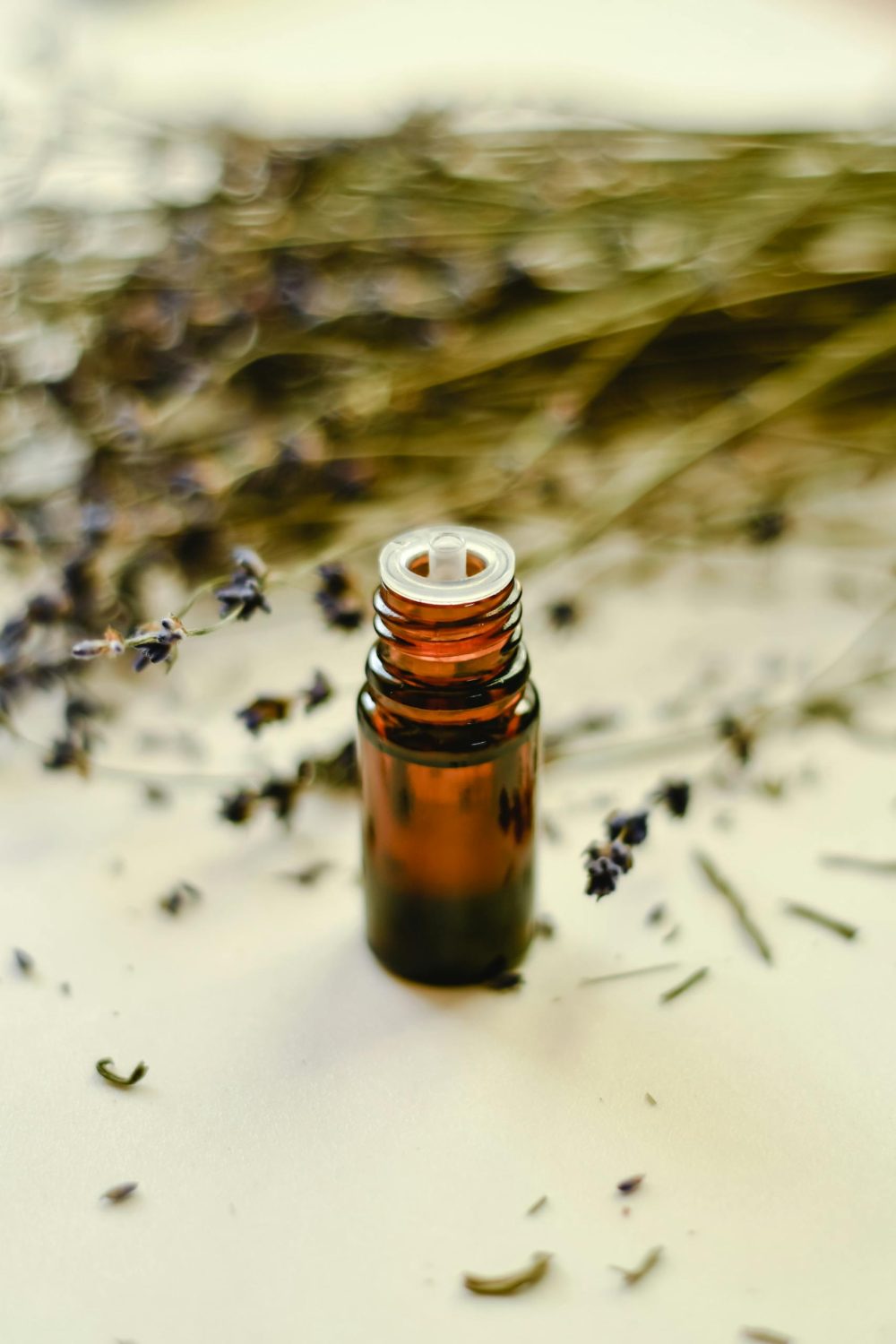
Why Lavender Is Associated With Calm and Emotional Comfort
Lavender (Lavandula angustifolia) is an aromatic flowering plant native to the Mediterranean region.
Its distinctive fragrance comes from a complex mixture of naturally occurring compounds, including linalool and linalyl acetate.
These aromatic constituents contribute to the scent that has made lavender a favorite in perfumes, skincare products, and aromatherapy.
Our relationship with fragrance is also deeply personal.
Certain aromas can become linked to memories, places, and feelings.
The scent of lavender might remind someone of a childhood garden, freshly laundered linen or a peaceful summer evening.
That emotional association can make a familiar fragrance particularly comforting.
For some people, lavender becomes part of a daily ritual: a signal that the working day has ended and it’s time to unwind.
And sometimes, creating that moment of calm is valuable in itself.
What Does Science Say About Lavender Essential Oil for Relaxation?
Lavender has attracted considerable scientific interest, particularly in research involving anxiety, stress, and sleep.
However, an important distinction is often overlooked: inhaling lavender essential oil is not the same as taking a standardized oral lavender preparation.
Evidence for these uses varies.
According to the National Center for Complementary and Integrative Health (NCCIH), some studies suggest that certain oral lavender preparations may help with anxiety. However, the evidence for lavender aromatherapy remains less conclusive.
A review of complementary approaches to anxiety also discusses promising findings, while highlighting limitations in the available research.
This doesn’t mean lavender aromatherapy has no value.
Rather, it means we should distinguish between what people enjoy and what scientific studies have established.
For everyday wellbeing, lavender can be appreciated as a pleasant fragrance that complements relaxation practices, without being presented as a treatment for anxiety disorders or other medical conditions.
Lavender Essential Oil for Stress and Emotional Wellbeing
Stress often shows up in small ways.
Perhaps your thoughts continue racing long after you’ve finished working.
Maybe you struggle to transition from a busy afternoon to a peaceful evening.
Aromatherapy can offer a simple sensory ritual to help you slow down.
Set aside ten minutes without your phone, make a cup of tea, and enjoy a subtle lavender fragrance while reading or practicing gentle breathing.
The scent doesn’t need to perform a medical function to become a meaningful part of your routine.
A simple lavender relaxation ritual
- Choose a comfortable, well-ventilated room.
- Add lavender essential oil to your diffuser as directed by the manufacturer.
- Sit comfortably and allow yourself a few minutes away from distractions.
- Breathe naturally rather than taking prolonged, concentrated inhalations.
- Switch off the diffuser when you’ve finished.
A short, intentional ritual may be more enjoyable than continuously diffusing essential oils throughout the day.
If you’re unfamiliar with diffuser styles, explore our guide to choosing the right aromatherapy diffuser.
Can Lavender Essential Oil Help You Sleep?
Lavender is frequently associated with bedtime, and its gentle fragrance makes it a popular choice for evening aromatherapy.
Research on aromatherapy and sleep has produced encouraging findings, but results aren’t consistent enough to establish lavender inhalation as a proven treatment for insomnia.
The NCCIH review of complementary approaches to sleep disorders discusses studies suggesting potential improvements in sleep quality, while emphasizing the need for larger, more rigorous research.
For everyday use, lavender may fit naturally into a calming bedtime routine.
You might dim the lights, put away electronic devices, read a few pages of a book, and enjoy a gentle lavender aroma before going to bed.
The goal isn’t to force sleep, but to create a restful environment.
For more on the relationship between scent, sleep, and memory, read our article on essential oils and UC Irvine research.
Three Gentle Lavender Essential Oil Blends for Relaxation
One of lavender’s most appealing qualities is its versatility in natural fragrance blending.
It pairs beautifully with soft florals, warm woods, and fresh citrus notes, making it suitable for several different moods.
The following diffuser blends are intended for adult use in a well-ventilated space and should be used with a diffuser compatible with essential oils. Follow the manufacturer’s instructions, and use fewer drops if your diffuser requires less.
1. Evening Stillness — Lavender and Frankincense
A gentle, resinous blend for quiet evenings, reading, or meditation.
Ingredients
- 2 drops lavender essential oil
- 1 drop frankincense essential oil
Lavender adds a soft floral character, while frankincense brings warm, contemplative depth.
This combination is lovely when you want your surroundings to feel peaceful without an overpowering fragrance.
2. Soft Heart — Lavender and Geranium
A delicate floral blend for moments when you want warmth and comfort.
Ingredients
- 2 drops lavender essential oil
- 1 drop rose geranium essential oil
Geranium adds a rosy, green floral note that complements lavender’s herbal sweetness.
Try this blend while journaling, listening to gentle music, or enjoying a quiet afternoon at home.
3. Golden Hour — Lavender and Sweet Orange
A fresh, uplifting fragrance inspired by the transition from afternoon into evening.
Ingredients
- 2 drops lavender essential oil
- 1 drop sweet orange essential oil
Sweet orange’s bright citrus softens lavender’s herbal edges, creating a welcoming, balanced aroma.
For more ideas on combining essential oils, visit our beginner’s guide to essential oil blending, including methods, ratios, and safety.
How to Make a Lavender Relaxation Roller
A personal aromatherapy roller lets you enjoy lavender’s fragrance without a diffuser.
For a simple adult formulation, start with a low concentration.
Ingredients
- 3 drops lavender essential oil
- 10 ml jojoba carrier oil
- One clean 10 ml glass roller bottle
Instructions
- Add the lavender essential oil to the clean roller bottle.
- Fill with jojoba oil, leaving enough space for the roller fitting.
- Secure the roller and gently turn the bottle to combine.
- Label the bottle with its ingredients and preparation date.
- Test a small amount on skin before regular use.
This makes an approximately 1% dilution, although actual concentrations vary with drop size.
Apply sparingly to a small area of skin, avoiding the eyes, temples, lips, and irritated or broken skin.
Discontinue use if irritation develops.
For additional dilution guidance, consult the Tisserand Institute’s essential oil safety recommendations.
A Lavender Bedtime Ritual Without a Pillow Spray
Pillow sprays are popular, but homemade essential oil and water mixtures need appropriate solubilizers and preservation to stay properly formulated.
Simply adding lavender oil to distilled water and shaking the bottle does not reliably disperse the oil.
A simpler option is to use a diffuser briefly before bedtime, following its instructions, then turn it off.
Alternatively, place a small sachet of dried lavender flowers near your bedside, out of reach for children and pets.
The fragrance is subtle, requires no complicated formulation, and can become part of a familiar evening routine.
How to Choose a Good Lavender Essential Oil
Not every bottle labeled lavender contains the same botanical material.
For aromatherapy, choose a supplier that clearly identifies the plant and provides transparent product information.
What to look for
Botanical name: Look for Lavandula angustifolia if you want true lavender essential oil.
Lavandin and other lavender-related plants have different aromatic profiles.
Ingredient transparency: The label should identify the essential oil rather than relying on vague terms such as fragrance or perfume oil.
Extraction method: Lavender essential oil is commonly obtained through steam distillation.
Batch information: Reputable suppliers may provide batch-specific testing or documentation about the oil’s composition.
Storage: Essential oils should be supplied in suitable containers and protected from excessive heat, light, and air.
Organic certification can be a useful purchasing consideration, but it doesn’t automatically guarantee purity, superior therapeutic effects, or freedom from every possible contaminant.
If you’re new to essential oils, our essential oil buyer’s guide explains what to consider before purchasing.
You can also explore our beginner’s essential oil shopping list on Benable.
Lavender Essential Oil Safety: What You Should Know
Lavender is often described as a gentle essential oil, but gentle does not mean risk-free.
Essential oils are highly concentrated aromatic substances and deserve thoughtful handling.
Always dilute before applying to skin.
Undiluted essential oils can cause irritation or allergic reactions, even in people who have used them without difficulty before.
Avoid prolonged, continuous diffusion.
Use essential oils intermittently, ensure adequate ventilation, and stop if the fragrance causes discomfort, headache, or coughing.
Never add essential oil directly to bathwater. Essential oils do not dissolve in water.
Epsom salts alone do not disperse them safely.
Use a properly formulated bath product or an appropriate dispersing system instead.
Do not ingest essential oils casually.
Commercial oral lavender preparations studied in clinical trials are not interchangeable with aromatherapy bottles.
Take additional precautions around children, pets, and sensitive individuals.
If you are pregnant, breastfeeding, have asthma or another medical condition, or take medications, seek appropriate professional advice before using essential oils.
There have also been reports raising questions about possible hormonal effects associated with lavender-containing products in children.
The evidence does not establish a clear causal relationship, but it would be inaccurate to say all concerns have been definitively disproven.
For further information, read the NCCIH lavender safety overview and the Tisserand Institute’s bath safety guidance.
Frequently Asked Questions About Lavender Essential Oil
Is lavender essential oil good for relaxation?
Many people find lavender’s fragrance pleasant and calming.
You can incorporate it into relaxation rituals such as reading, meditation, or gentle breathing.
Scientific evidence for lavender aromatherapy as a treatment for stress or anxiety remains inconclusive.
Can lavender essential oil help with anxiety?
Some research on specific oral lavender preparations has shown promising results for anxiety.
However, this should not be confused with evidence for inhaled lavender essential oil.
Aromatherapy should not replace professional care for persistent anxiety symptoms.
Is it safe to use lavender essential oil every day?
Many adults may tolerate appropriate use well, but individual sensitivity varies.
Avoid prolonged, unnecessary exposure, dilute topical products, and stop use if irritation or other symptoms occur.
Can I put lavender essential oil directly on my pillow?
Avoid applying undiluted essential oil directly to bedding, where it may contact skin or eyes.
Instead, consider a properly formulated linen product or a dried lavender sachet.
What essential oils blend well with lavender?
Lavender pairs beautifully with frankincense, geranium, sweet orange, cedarwood, and Roman chamomile.
Each combination creates a different fragrance character, from floral and comforting to woody and grounding.
Is natural lavender oil always better than synthetic lavender fragrance?
Natural lavender essential oil and synthetic fragrance compositions are different products, but natural does not automatically mean safer.
Both can contain substances that can cause irritation or allergic reactions. Quality, formulation, concentration, and individual sensitivity matter.
Bringing Lavender Into Your Everyday Life
Lavender’s appeal goes beyond its long history and familiar floral scent.
It offers an opportunity to make everyday routines feel more intentional.
A few minutes of quiet, a favorite book, a gentle fragrance, and a peaceful room may seem small.
Yet these simple moments can become meaningful habits that help us step away from the day’s demands.
Lavender essential oil doesn’t need to promise extraordinary healing powers to deserve a place in a thoughtful aromatherapy collection.
Sometimes its greatest appeal is simply the pleasure of a familiar, comforting scent.
Perhaps that is where the real beauty of aromatherapy begins: not in expecting a fragrance to change everything, but in letting it enrich the moments we create for ourselves.
Continue Exploring SCENTSATIONAL
- From Calm to Confidence: The Emotional Magic of Five Essential Oils
- Feminine Essential Oils for Emotional Grounding and Inner Connection
- How Essential Oils Work on the Brain: Their Molecular Magic
- The Best Places to Use Essential Oils
- Explore Essential Oils by Category
Research and Safety References
- National Center for Complementary and Integrative Health — Lavender: Usefulness and Safety
- NCCIH — Anxiety and Complementary Health Approaches: What the Science Says
- NCCIH — Sleep Disorders and Complementary Health Approaches
- Tisserand Institute — Essential Oil Safety Guidelines
- Tisserand Institute — Essential Oil Dilution Guidelines
- Tisserand Institute — Essential Oil Bath Safety
Educational disclaimer: This article is intended for general aromatherapy education and is not medical advice. Do not use essential oils as a substitute for professional diagnosis or treatment

2 Comments
Comments are closed.