The Mystical Garden: A Look at Gan Eden and Soul Scents
Of all five senses, smell is the strangest one.
In the context of The Mystical Garden – Gan Eden, scent and its mysteries take on an even deeper meaning.
Cause you can close your eyes.
You can cover your ears.
But a scent moves through you before you decide to let it in.
Kabbalah teaching (Jewish mysticism) treats that fact as more than a curiosity.
This all comes down to your soul scent and the principles of the mystical garden.
It holds that smell reaches the soul directly, without asking the body’s permission first.
And it traces that idea back to the very beginning, to the fragrance that filled the mystical garden of Gan Eden before the beginning of our time on earth.
Note: This article contains affiliate links that may earn a commission; otherwise, the price is unaffected. All references are carefully selected to provide the best and most wholesome results.
The Sense That Doesn’t Touch the Body
Eating nourishes the body.
Sight and hearing take in the outside world and hand it to the mind to sort out.
Touch is direct contact, skin to surface.
Smell works differently.
When you breathe in a scent, nothing physical passes into you the way food does.
There’s no chewing, no digesting, no processing.
The fragrance simply arrives.
And something in you responds before you’ve had a chance to think about it.
This is the detail Chassidic sources return to again and again.
Smell is the one sense the body doesn’t get to claim as its own.
The soul takes it in directly.
That’s why a scent can bring back a memory, a mood, or a feeling of closeness to something larger than yourself, faster than a thought ever could.
I explored a version of this idea in Aromatherapy History and Its Healing Evolution, where I traced how ancient cultures understood scent as a bridge between body and spirit.
Kaballah adds the reason why.
Smell was built, from the start, to work on the soul and nothing else.
The Mystical Garden Before Anything Changed
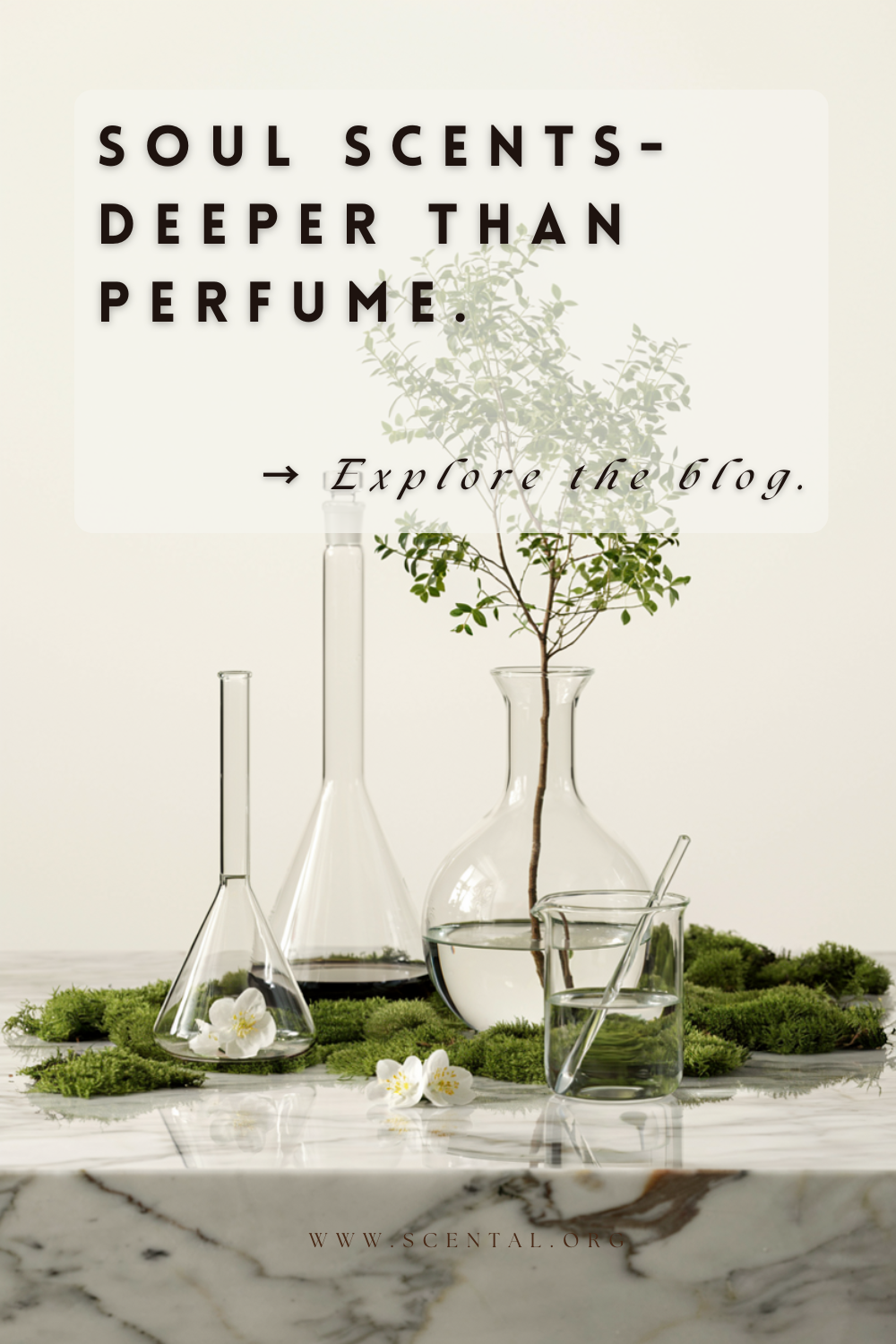
Gan Eden, before the first sin (the act of disconnection from Gd), is described as a place where every sense worked at full strength.
Adam and Eve saw with unclouded clarity.
They heard with unclouded understanding.
And they smelled a fragrance that, according to tradition, doesn’t exist anywhere in the world today.
Then came the sin, and something shifted.
Sight grew limited. Hearing grew selective.
But smell, the mystical teaching holds, stayed closer to what it always was.
It didn’t fall the way the other senses did, because it was never rooted in the physical to begin with.
There was nothing physical in it to damage.
This is part of why fragrance carries so much weight across so many traditions, not just Jewish ones.
A scent can feel like it’s reaching backward, toward something you can’t quite name but recognize the moment it arrives.
Kabbalah gives that feeling a name.
It’s the soul remembering the garden, because the sense that carries the memory was never fully cut off from it.
The Tree of Life Symbol and What It Has to Do With Smell
The Tree of Life symbol shows up everywhere in Kabbalah, usually as a map of the ten Sefirot, the channels through which divine energy moves into the world.
Most people learn the tree of life meaning as a diagram of balance: mercy and judgment, giving and receiving, all held together by a central column.
But the tree itself stood in the same garden as the fragrance we’re talking about.
And smell shows up in Torah at exactly the moment the tree becomes a problem.
Eve is drawn to the fruit partly through her nose.
Scent is what pulls her toward the tree before her hand ever reaches it.
So the Tree of Life symbol and the story of smell are tied together from the first pages of the text.
One represents the structure divine energy flows through.
The other is the sense that first proved how directly that energy can move a person, for better or worse.
I go further into how this plays out through the Sefirot in Mystical Rituals with Essential Oils in Kabbalah, if you want the fuller map.
Why This Matters for How You Use Essential Oils
Once you see smell this way, aromatherapy stops being just a wellness trend.
It becomes a practice with a much older purpose behind it.
When you inhale frankincense before prayer, or diffuse rose to settle an anxious mind, you’re not just triggering a pleasant association. You’re using the one sense built to speak to the soul without static in between.
That’s different from choosing a candle because you like how it smells.
This is also why certain oils show up again and again across ancient and mystical texts.
Myrrh, frankincense, and cinnamon weren’t chosen at random for the anointing oil in the Temple, or for embalming rituals, or for sacred incense.
People chose them because their fragrance carried weight that could be felt, even without a word for why.
Soul Perfume: Why Real Scent Speaks to the Soul
If smell really does bypass the body and speak straight to the soul, then the scents you surround yourself with aren’t a small decision. They’re closer to a spiritual one.
This is the idea behind what I call soul perfume, and it’s the whole premise of the Scent of a Soul Method.
A true essential oil, pressed or distilled from a living plant, still carries something of what it grew from.
Synthetic fragrance doesn’t.
It’s built to smell pleasant to the nose, not to speak to anything deeper.
That difference matters more than most people realize when they’re shopping for a candle or a perfume.
A synthetic scent might smell identical to a natural one on paper.
But it can’t do what a soul perfume does, because it was never grown, never alive, never carrying anything to begin with.
If you’ve ever caught a scent and felt something shift in you before you understood why, that wasn’t your imagination.
That was the one sense still doing what it was built to do from the beginning.
Choosing Soulful Scents Over Everything Else
Once you start paying attention, you notice the difference between a scent that’s just pleasant and one that actually reaches you.
Soulful scents tend to be simple.
They come from a single plant, or a small handful of them, without layers of synthetic fixatives added to make them last longer on a shelf.
This is why my curated non-toxic product list on Benable leans so heavily on real, plant-based oils instead of the fragrance blends you’d find at a department store counter.
It’s not about being a purist for its own sake.
It’s about giving the one sense that bypasses the body something real to work with.
You don’t need a large collection to start.
One or two well-chosen oils, used consistently, will teach you more about how scent affects you than a shelf full of candles ever could.
Three Soulful Scent Recipes to Bring the Garden Back
If you want to feel what this teaching means instead of just reading about it, these three roller-bottle blends are a place to start.
Each one leans on ylang ylang, myrrh, and frankincense in different proportions, because each oil carries a different weight.
Ylang ylang softens and opens.
Myrrh grounds and steadies.
Frankincense lifts and clears.
Together, they cover most of what a soul needs on a hard day.
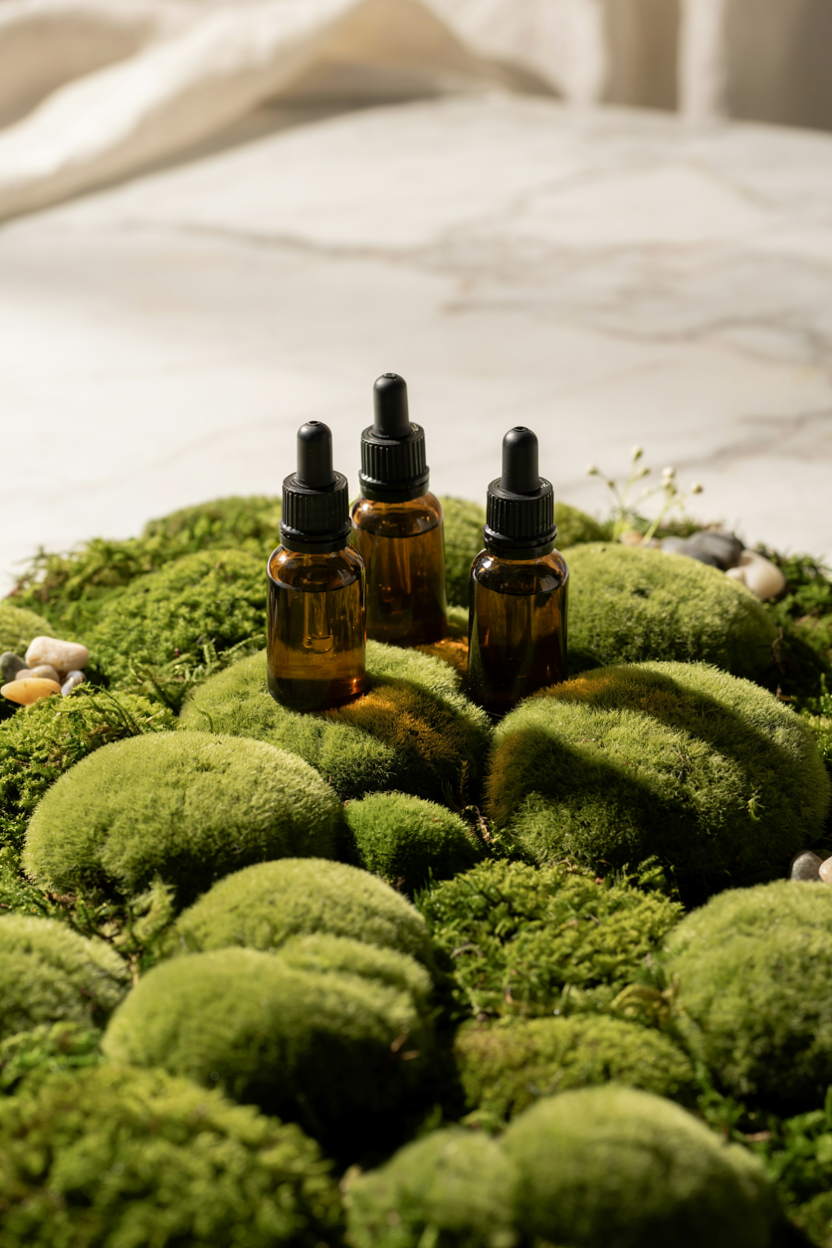
Use a 10ml glass roller bottle.
Fill the rest of the way with a carrier oil like jojoba or fractionated coconut oil.
The Return to Eden
- 4 drops frankincense
- 3 drops myrrh
- 2 drops ylang ylang
- 3 drops mandarin
This one leans toward clarity.
Roll it onto your wrists or the back of your neck before prayer, meditation, or anything that asks for a clear head and a settled heart.
Neshamah’s Whisper
- 2 drops ylang ylang
- 2 drops frankincense
- 1 drop myrrh
- 4 drops bergamot
Softer and more floral, this blend is for evenings when you want to unwind without shutting down.
Roll it over your collarbone before bed, or wherever you’d normally reach for perfume.
The Anointed Path
- 3 drops myrrh
- 3 drops frankincense
- 1 drops ylang ylang
- 2 drops jasmine
Heavier and more resinous, closer to what you’d imagine the Temple incense carrying.
Good for moments that call for depth: a hard decision, a difficult conversation, a day you want to move through with more weight and less noise.
You’ll find all three oils, along with the rest of what I reach for, on my curated non-toxic product list on Benable.
And if you want the full method behind why these particular combinations work on the soul the way they do, that’s laid out in Scent of a Soul.
Bringing It Back to the Garden
Every time you choose a real, plant-based fragrance over a synthetic one, you’re choosing to work with the sense that was never fully cut off from the mystical garden of Eden.
Every time you notice a scent shifts your mood before your mind catches up, you’re getting a small taste of what the mystics say smell was always meant to do.
This is also the heart of what I explored in Discovering My Soul Scent with Essential Oils, where I walked through my own process of finding fragrances that felt less like a preference and more like a recognition.
Same idea, traced back to its source.
The fragrance of the garden hasn’t disappeared.
According to this teaching, it’s simply waiting in the one sense built to carry it, undamaged, in every breath you take.
Want to go deeper into how the soul’s connection to scent works, oil by oil?
My book, Scent of a Soul, walks through the full lexicon and the method behind choosing oils that speak to your own soul’s blueprint.
- https://scental.org/mystical-rituals-with-essential-oils-in-kabbalah/
- https://scental.org/finding-light-in-winters-darkness-a-kabbalistic-approach-to-essential-oils/
- https://scental.org/the-power-of-your-subconscious-mind-pdf/