Essential Oils vs Fragrance Oils: What’s Really in the Bottle
This is one of the big questions I get a lot: what is the difference between a fragrance, an oil, and a perfume?
Or just people talking about scent in a manner where they simply can’t distinguish.
It’s a problem cause it creates myths and confusion.
Pick up almost any lotion, candle, or “natural” perfume and look at the ingredient list.
Somewhere near the end, you’ll see one word: fragrance. Or parfum.
Sometimes “natural fragrance” or “aroma.”
That one word can stand in for a mix of dozens of chemicals.
And the brand doesn’t have to tell you what they are.
This isn’t a conspiracy theory.
It’s how the law is written.
Note: The article contains affiliate links that may earn a commission; otherwise, the price is unaffected. All references are carefully selected to provide the best and most wholesome results.
Essential Oils vs Fragrance Oils: Why the Label Doesn’t Tell You Everything
In the US, cosmetic companies have to list their ingredients.
That’s required under the Fair Packaging and Labeling Act. But there’s a carve-out.
The law says companies don’t have to disclose trade secrets.
And fragrance formulas count as trade secrets by default.
So a company can legally write “fragrance” or “parfum” on the label and stop there, no matter how many individual chemicals are actually in that blend.
There’s no cap on how many ingredients can hide behind that single word.
I talk about this and the importance of length to the purity of essential oils in my book Scent of Soul.
There is a deep mystical truth ot the essence of nature, which is what essential oils basically come down to.
A “fragrance” can be one aroma compound.
It can also be a mix of 50, 80, or more synthetic chemicals, solvents, and fixatives, blended by a fragrance house and sold to the brand as a finished formula.
The brand itself often doesn’t even know the full breakdown.
They just know it smells like “clean linen” or “warm vanilla.”
Europe’s rules are stricter across the board, which is why the same product often has a more detailed label if it’s sold in the EU than if it’s sold in the US.
So right now, in most of the US, “fragrance” can legally mean almost anything.
I strongly suggest you go to my article about what oils I prefer and why, cause I have to say, if you don’t know what to look for
when shopping for essential oils and don’t want fragrance oils, then you’re most likely getting the wrong thing.
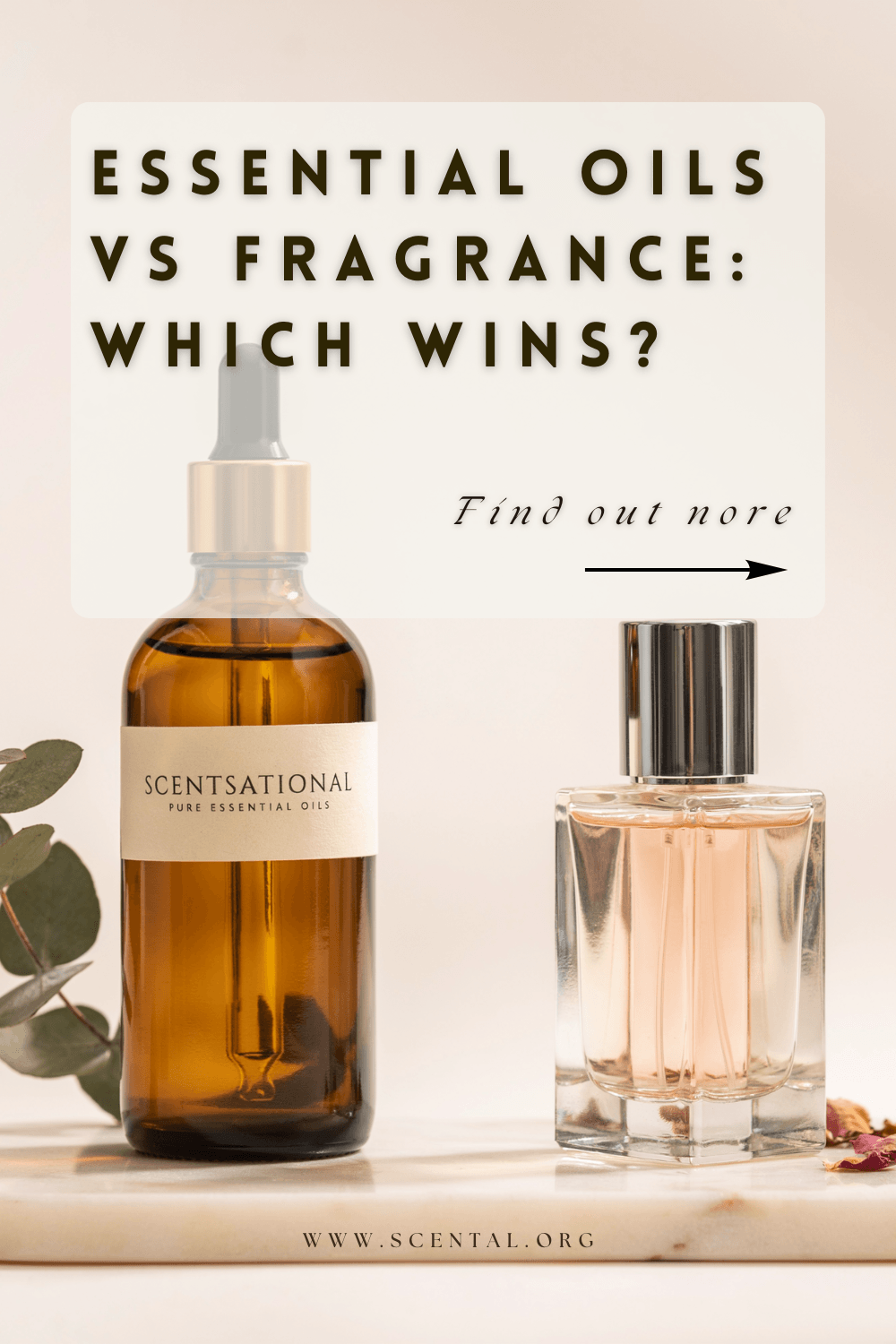
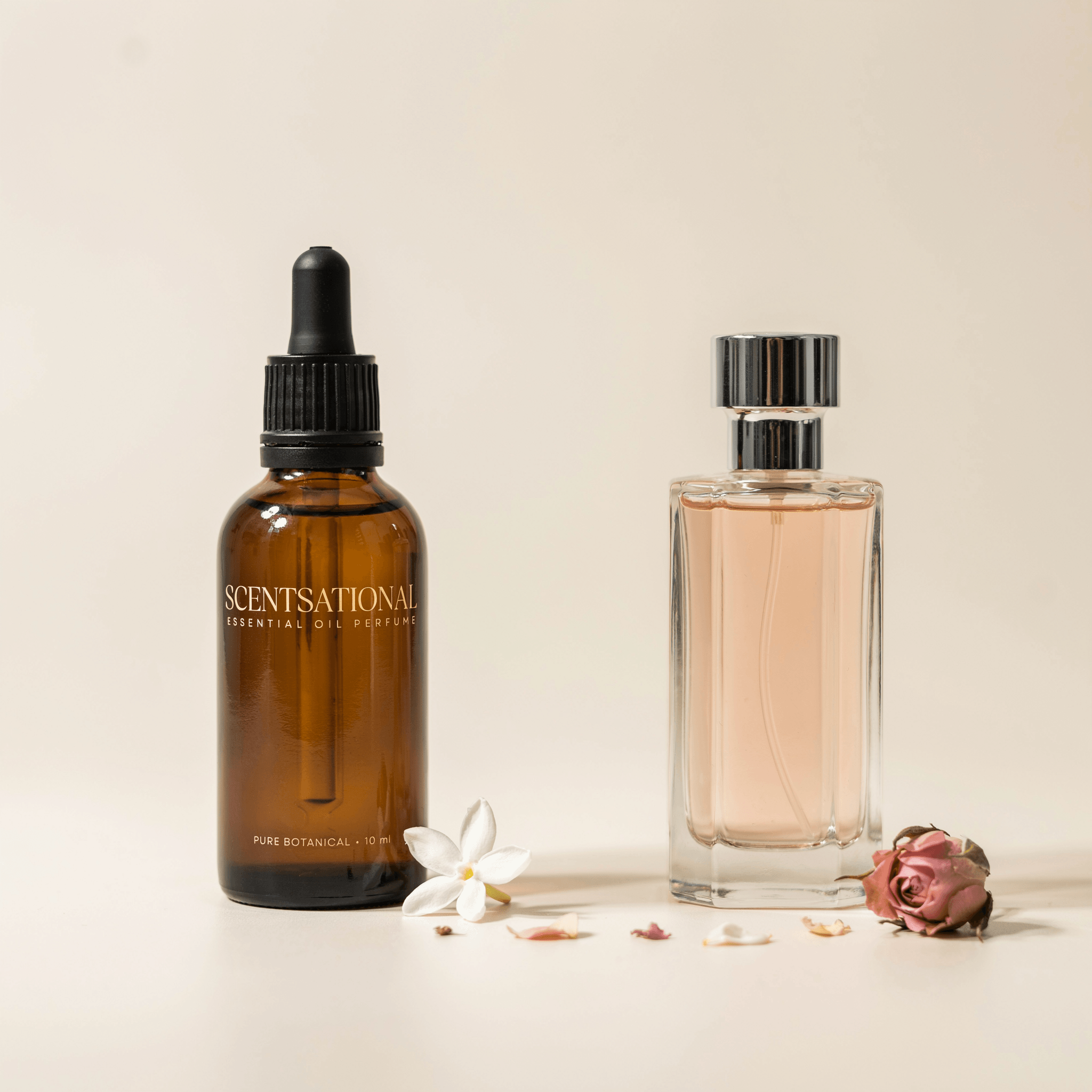
Fragrance oils will often come in packaging similar to essential oils, and they will say: natural or pure.
It is very difficult to know what is what.
Why “Natural” and “Fragrance-Free” Don’t Mean What You Think
None of this is illegal.
It’s just legal in a way most people don’t expect.
Words like “natural fragrance” and “botanical scent” have no fixed legal definition.
A brand can use them even if the scent is built mostly from synthetic aroma chemicals, as long as one or two of those chemicals happen to occur somewhere in nature too.
“Unscented” doesn’t always mean scent-free either.
Sometimes it means a masking fragrance was added just to cancel out the smell of the other ingredients, and that masking fragrance still isn’t listed by name.
None of this means every synthetic fragrance is dangerous.
Most are used at low levels and considered safe by regulators.
But if you’re someone who reacts to fragrance, or you just want to know what’s actually going on your skin, “fragrance” on a label tells you nothing useful.
It’s a locked box.
Essential oils work differently.
A true essential oil is a single distilled or pressed extract, like lavender oil or bergamot oil.
You can look up exactly what’s in it, because it comes from one plant, not a proprietary blend of unnamed chemicals.
That’s the real difference in essential oils vs fragrance: one is traceable, one isn’t.
How to Build Scents at Home With Essential Oils-
The Easy Way
The upside of understanding this is that you don’t need a mystery formula to smell good.
Popular perfumes tend to fall into a handful of scent families: fresh citrus, warm gourmand, soft floral, woody-ocean, and fruity-floral.
You can build your own version of each one with essential oils you can actually name.
A few safety basics before the recipes:
- Essential oils are strong. For skin application, keep the total dilution around 2 to 3 percent for adults.
That’s roughly 12 to 18 drops of essential oil per 1 fluid ounce (30 ml) of carrier oil. - Always dilute in a carrier oil like fractionated coconut oil, jojoba, or sweet almond oil.
Never apply essential oils undiluted to skin. - Patch test on your inner arm and wait 24 hours before wearing a new blend on a larger area.
- Citrus oils like bergamot and lemon can make skin more sensitive to sun.
Avoid direct sun exposure on treated skin for 12 hours, or use steam-distilled bergamot (called “bergaptene-free” or FCF) instead. - Skip clary sage and a few other oils during pregnancy, and check with a doctor if you’re pregnant, nursing, or on medication before starting any new blend.
- Keep all blends away from eyes and out of reach of kids and pets.
Each recipe below makes a 10ml roller bottle.
Fill the rest of the bottle with your carrier oil after adding the drops.
Find what you need here.
Recipes with Essential Oils:
Fresh Citrus Morning Blend:
For the bright, clean citrus style that shows up in so many popular “everyday” fragrances.
- 6 drops bergamot
- 4 drops sweet orange
- 2 drops petitgrain
- Top with carrier oil
Warm Vanilla-Amber Blend:
For the cozy, gourmand style that dominates a lot of bestselling warm perfumes.
- 5 drops vanilla oleoresin (or vanilla CO2 extract)
- 4 drops sandalwood
- 3 drops benzoin resinoid
- Top with carrier oil
Soft Floral Blend:
For a powdery, romantic floral, close to the soft rose-and-musk style found in many classic florals.
- 6 drops geranium
- 4 drops ylang ylang
- 2 drops rose absolute (or rose otto if budget allows)
- Top with carrier oil
Woody Ocean Blend:
For the clean, driftwood-and-salt-air style used in a lot of unisex and men’s fragrances.
- 5 drops cedarwood
- 4 drops cypress
- 3 drops bergamot
- Top with carrier oil
Fruity Floral Blend:
For a lighter, fruit-forward floral in the style of popular young-audience perfumes.
- 5 drops mandarin
- 4 drops jasmine absolute
- 3 drops ylang ylang
- Top with carrier oil
Shake before each use, since essential oils and carrier oils can separate.
Store in a cool, dark spot, and use within 6 to 12 months for the best scent.
The Bottom Line
The word “fragrance” on a label isn’t fake, but it isn’t honest in the way people assume.
It’s a legal shortcut that lets companies skip disclosure.
Once you know that, essential oils vs fragrance stops being a marketing question and becomes a simple choice: a traceable single ingredient, or an unnamed mix you can’t check.
You don’t have to give up your favorite scent styles to make that switch.
You just have to build them yourself, one drop at a time.
For more non-toxic living guides and product picks, browse my articles, or check the curated list on Benable for clean scent staples worth keeping on hand.
- https://scental.org/shop-the-book-scent-of-a-soul/
- https://scental.org/high-quality-essential-oils-how-to-choose-a-buyers-guide/
- https://scental.org/the-sience-to-essential-oils/