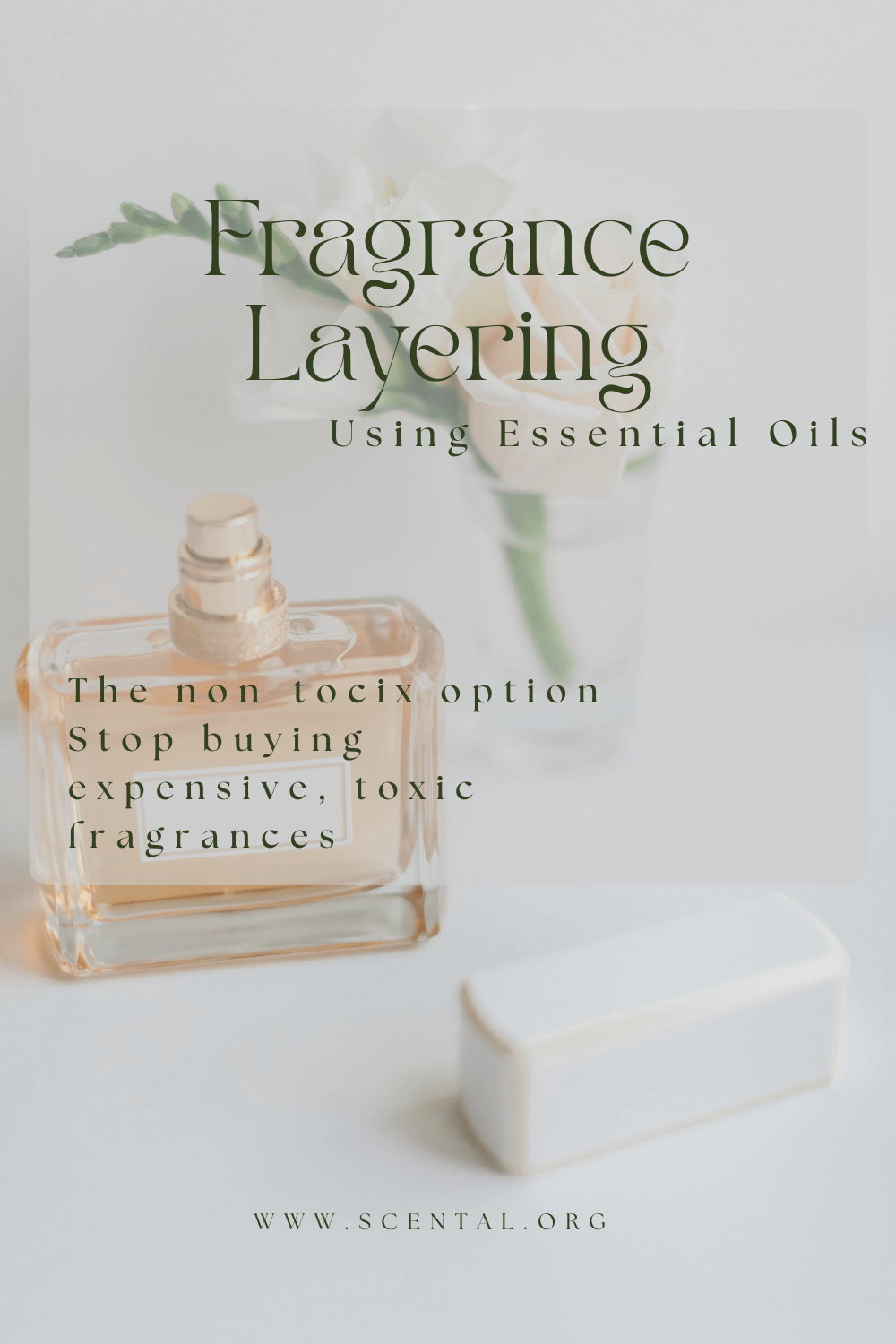
Fragrance Layering: How to Layer Scent That Lasts all Day
You can make your own signature scent at home.
Fragrance layering lets you combine essential oils to create perfumes that last longer and smell unique.
Getting your signature scent and being asked, “What are you wearing?” will put a smile on your face.
It happens to me all the time.
Here’s how I do it.
Note: The article contains affiliate links that may earn a commission; otherwise, the price is unaffected. All references are carefully selected to provide the best and most wholesome results.
How to Make Perfume Last All Day
Start with a base. Your skin needs moisture to hold fragrance.
Apply unscented lotion or carrier oil first.
Layer from heaviest to lightest.
Base notes go on first, then middle notes, then top notes.
This mirrors how perfumes are built in labs.
The basic ratio:
- 30% base notes (sandalwood, vanilla, patchouli)
- 50% middle notes (lavender, rose, ylang-ylang)
- 20% top notes (bergamot, lemon, peppermint)
Apply to pulse points. Wrists, neck, and inner elbows work best.
The warmth helps diffuse the scent.
Create a Layering Technique with Essential Oils
Mix your oils in a small glass bottle. Start with 10-15 drops total for a roll-on blend.
Example blend:
- 3 drops sandalwood (base)
- 5 drops lavender (middle)
- 2 drops bergamot (top)
- Fill the rest with jojoba or fractionated coconut oil for spray, dilute with witch hazel.
Let it sit for 24 hours before using.
The oils need time to come together.
Fragrance Layering Chart – and get the mini e-book with 15 recipes
| Woody | Cedarwood, Sandalwood | Pine, Juniper | Bergamot, Grapefruit |
| Floral | Vanilla, Benzoin | Rose, Jasmine, Geranium | Neroli, Petitgrain |
| Fresh | Vetiver, Oakmoss | Lavender, Clary Sage | Lemon, Eucalyptus |
| Oriental | Patchouli, Amber | Cinnamon, Cardamom | Orange, Mandarin |
| Citrus | Frankincense | Lemongrass | Lime, Grapefruit, Bergamot |
Recreating Popular Store Perfumes
You can mimic expensive fragrances with the right combinations.
Fresh and clean (similar to light florals):
Warm and sensual (similar to oriental scents):
- 3 drops of patchouli
- 4 drops of ylang-ylang
- 2 drops of cinnamon
- 1 drop orange
Woodsy and sophisticated (similar to unisex fragrances):
- 4 drops of sandalwood
- 3 drops of lavender
- 2 drops of cedarwood
- 1 drop of lemon
Perfume Layering Combinations That Work
Some oils blend better than others.
Safe pairings:
- Vanilla + any citrus
- Lavender + rosemary
- Sandalwood + rose
- Patchouli + orange
- Bergamot + ylang-ylang
Avoid these:
- Too many citrus oils together (they compete)
- Heavy base notes without lighter top notes (too overpowering)
- More than 4-5 different oils in one blend (gets muddy)
Safety Recommendations
Dilute essential oils before applying to skin.
Safe dilution rates:
- Face: 1% (1 drop per teaspoon of carrier oil)
- Body: 2-3% (2-3 drops per teaspoon)
- Pulse points: 5% maximum
Do a patch test first.
Apply a small amount to your inner forearm and wait 24 hours.
Oils to use carefully:
- Cinnamon (can burn skin)
- Citrus oils (cause sun sensitivity)
- Clove (very strong)
- Peppermint (too much causes headaches)
Pregnant women should avoid certain oils.
Skip clary sage, rosemary, and juniper during pregnancy.
Store your blends in dark glass bottles as light breaks down essential oils.
Tips for Better Results
Give your blends time.
Scents change after sitting for a few days.
Keep notes. Write down what you mixed and how much.
You’ll want to recreate the good ones.
Start simple.
Master three-oil blends before trying complex combinations.
Combine each blend as you layer the ones that work for you
Reapply throughout the day.
Natural perfumes don’t last as long as synthetic ones.
They are designed to be absorbed into your skin and become part of your biology.
Others can smell them on you, but you can’t – synthetic parfumes will stay on the skin as a synthetic extra layer.
Highly toxic.
Classic Techniques from Perfume Labs
Professional perfumers use the fragrance pyramid.
You’re doing the same thing at home.
They also use fixatives. These make scents last longer.
Vanilla, benzoin, and sandalwood work as natural fixatives in your blends.
The 24-hour rule matters.
Perfumers never judge a scent right after mixing. Neither should you.
Conclusion:
Fragrance layering with essential oils gives you control over your scent.
Start with the chart above, follow the ratios, and test combinations on your skin.
You’ll find what works for you.
The mini e-book, The Sanctuary Scents Guide, will be an excellent support with more recipes and guidelines.
- https://scental.org/how-to-create-an-essential-oil-blend-in-3-easy-steps/
- https://scental.org/discovering-my-divine-scent/
- https://scental.org/balancing-your-divine-energies-with-essential-oils/
- https://scental.org/face-oils-and-serum-layering-anti-aging-products/